
What is confirmed for Breathedge 2 equipment?
Tools, equipment, spacesuit upgrades, and repairs are confirmed. Exact named catalogs grow with Early Access patches.

Breathedge 2 is a single-player space survival comedy from RedRuins Softworks (published by HypeTrain Digital), Early Access since August 31, 2026. This Breathedge 2 equipment guide covers the confirmed gear loop — tools, spacesuit upgrades, and repairs — so you extend oxygen, temperature margin, salvage reach, and combat readiness during Early Access Chapter 1 without inventing full weapon tier lists. Verified September 3, 2026 · Buy on Steam.
| Fact | Detail |
|---|---|
| Platform | Steam (Windows PC · Early Access) |
| Mode | Single-player |
| Confirmed gear systems | Tools · equipment · spacesuit upgrades · repairs |
| Survival pressure | Oxygen · temperature (confirmed) |
| Content scope | First EA chapter · story unfinished |
| Achievements | 39 Steam achievements |
| Named weapon tier list | TBA — wait for stable stats per EA build |
| Reviews | Very Positive (Steam snapshot — changes over time) |
Official materials confirm four live gear pillars in Early Access: tools, broader equipment, spacesuit upgrades, and repairs. Vehicles, advanced base building, and many later modules are roadmap themes — treat them as future EA unless your build already shows them.
| Pillar | What it unlocks | EA status |
|---|---|---|
| Tools | Salvage interactions, cutting/mining jobs, early combat options | Live — names/recipes verify in-game |
| Equipment | Wearables, carried kits, and craftable gear beyond basic tools | Live — full catalog expands with patches |
| Spacesuit upgrades | Longer or safer EVA under oxygen and temperature pressure | Live — tied to blueprints and materials |
| Repairs | Restore stations, devices, and broken gear so routes stay usable | Live — quest and hub critical |
| Vehicles | Flight and ground travel fantasy | Mostly future EA |
| Base building modules | Expanded construction beyond ship cabin themes | Mostly future EA |
This page is the Breathedge 2 equipment hub for problem-solving: what to craft next, when suit work matters, and when repairs unblock story. Exact damage numbers, full weapon names, and S/A tier boards stay TBA until enough builds stabilize — inventing them would mislead more than an honest gap.
Blueprints and materials feed every craft. Pair this page with crafting for recipe priority and resources for scavenger routes. Next: which tools actually open the first hour.
Early Chapter 1 play revolves around a short tool chain: something that breaks first barriers, a tool that harvests harder deposits, and a cutter that opens wired or sealed salvage. Exact blueprint screens change with patches — verify materials in your build — but the priority order stays stable.
| Early need | Typical tool role | Why it comes first |
|---|---|---|
| Break locks / pry barriers | First hand tool (crowbar-class) | Opens the first NPC and station interactions |
| Mine aluminum-class deposits | Impact / thumper-class tool | Feeds the next craft queue |
| Cut wires, seals, soft materials | Cutting tool | Unlocks containers and repair parts you cannot smash |
| Later machine work | Specialized tools (e.g. twist/torque class) | Appear after refined materials — do not rush before blueprints |
| Carry capacity helpers | Found bags / barrels used on processors | Quality-of-life, not a combat meta |
After you craft a tool, link it to a hotbar slot before you leave the safe pocket. Inventory clutter is common in the outskirts: if the tool is not slotted, you will waste oxygen hunting the icon while meters drain.
Side objectives that sit next to your hub often drop the blueprints and funny dialogue for these tools — finishing the nearby assemble/repair jobs is usually faster than wandering the far map. Detail the material hunt on resources; keep story order on the walkthrough.
Workbench-style attachments (for example adding a gear piece for a small damage bump, or scavenging duct tape / scissors-class parts) improve the club or tool you already carry. That is usually cheaper than crafting a brand-new combat set you do not need yet.
Treat attachment recipes as build-verified: if the workbench does not list the part, do not invent it from older guide copies. Suit upgrades are next when travel time — not smash speed — is the bottleneck.
The spacesuit is the real travel budget in Breathedge 2. Official copy confirms you upgrade the suit and equipment so exploration range grows. Oxygen and temperature are the confirmed meters that punish long EVA; suit work is how you stop dying to the commute.
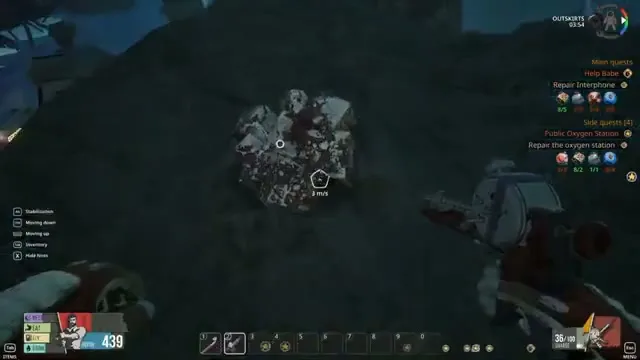
The AI living in the suit is a narrative and HUD companion — banter, prompts, and guidance — not a separate RPG class tree. Suit upgrades still matter because they change how long Man can stay outside under oxygen and temperature pressure.
Equip starting gear before the first EVA (right-click / equip flow in inventory). Skipping the suit pieces and charging outside is an early soft fail, not a clever speedrun.
If you keep returning to refill oxygen before finishing a salvage loop, craft the next spacesuit upgrade before the next niche tool. If a sealed panel or deposit literally cannot be interacted with, craft the missing tool first — suit stats will not open a locked interaction.
| Situation | Craft next |
|---|---|
| You bounce home mid-scavenge on empty O₂ | Spacesuit / life-support upgrade |
| Temperature warnings cut every long flight | Suit thermal protection if available in your build |
| A deposit or seal shows a missing-tool prompt | The named tool, then resume suit work |
| You can open everything but die in Coffinbot chases | Repair margin + basic combat readiness, then suit |
| Inventory full but meters are fine | Storage helpers / drop off at hub — not a suit craft |
Gameplay builds show craftable purified oxygen packs that dump a large oxygen restore when you need a mid-route top-up. They do not replace suit upgrades — they buy one more loop after you already overextended.
Safe pockets (powered stations, repaired public oxygen points) remain the primary refill. Pair suit planning with the survival page so equipment upgrades map to real meter habits. Next: repairs that unlock those safe pockets.
Repairs are confirmed equipment work, not optional flavor. Early hubs ask you to restore devices (oxygen station pieces, lamps, windows, nutrient/kettle-class machines, antennas) so the station becomes livable and side blueprints open.
| Situation | Push story? | Repair / craft first? |
|---|---|---|
| Main marker is far and O₂ margin is thin | No | Suit upgrade or oxygen station repair |
| Quest object is behind a cut/seal interaction | No | Cutting tool, then interact |
| Hub food/water converters are broken but you have scrap | Maybe | Repair converters — saves future EVA time |
| Only cosmetic junk is broken | Yes | Ignore until scrap is leftover |
| Antenna / signal objective is active | After fix | Repair the listed receiver/antenna pieces |
Fixed machines often return materials or renewable supplies (ice-to-water, biomass processors). That scrap loop funds the next Breathedge 2 equipment craft without another dangerous flight.
If a repair needs glass, aluminum, duct tape, or refined parts you have not seen, pivot to a short scavenger circuit rather than abandoning the hub. Locations context lives on locations. Combat readiness is the remaining gear question.
Matched by build plan, shared topics, and guide progression — not random related links.
Combat exists in the live EA build. Coffinbots are the confirmed hostile robot force. Early tools double as salvage implements and crude weapons — blocking and striking with the slotted tool is enough to escape some encounters, but health sponges reward fleeing to a safe pocket.
Most early progression comes from opening containers, mining deposits, and repairing stations — not from farming robot kills. If a tool upgrade adds a small damage bump, take it when the materials are already in inventory; do not derail the craft queue for a speculative DPS race.
Turrets and enforcement bots that punish movement are often solved by repairing a nearby panel or shutting a system down with the right resources, not by standing still and trading hits. Tip videos highlight back-of-building computer repairs that disable nasty defenses — verify the interaction in your build.
Some early play sessions report no obvious tool durability meter. Treat that as build-dependent: if your UI shows wear, repair before a dangerous fight; if it does not, still keep a spare slotted tool so you are not empty-handed after a chase.
Full weapon catalogs and module slots will grow across EA. Until then, keep the early access page bookmarked for patch notes that add gear. Common mistakes next.
These failures are habit problems, not missing “hidden OP weapons.”
If a sealed salvage node is still locked, another inventory gadget will not help. Build the interaction tool first.
Repeating the same EVA length after three oxygen deaths means the spacesuit upgrade — or a repaired oxygen station — is overdue. Read survival and come back with a longer budget.
Crafted tools that sit unsorted in a junk pile are unused tools. Slot them before you leave the hub.
Chicken is a story companion. There is no confirmed breed/train/pet-equipment loop. Do not wait for pet collars that do not exist — spend scrap on tools and suit upgrades instead. Hub management continues on ship and crew.
Series search noise is full of first-game chapter guides. Sequel Early Access Chapter 1 uses its own blueprints. When a guide disagrees with your workbench, trust the workbench.
Tools, equipment, spacesuit upgrades, and repairs are confirmed. Exact named catalogs grow with Early Access patches.
Yes — upgrading the spacesuit and related equipment is part of the official loop so you can explore farther under oxygen and temperature pressure.
Start with the barrier-breaking hand tool, then the deposit/impact tool, then the cutter. Verify recipe names in your build’s blueprint screen.
Treat durability as TBA per build. Some early sessions show no clear wear meter; still keep a slotted backup for fights and salvage.
Not yet. Wait for stable stats before ranking builds. This page prioritizes unlock order and survival value instead.
Expect gaps. EA adds more items and interactions over 16–20 months of planned Early Access.
Flight and ground vehicles are mostly future EA. Do not assume a full vehicle bay is required to finish Chapter 1.
Exploration, salvage, and side objectives. See crafting for blueprint priority and beginner guide for the first-hour loop.
September 3, 2026
Matched by build plan, shared topics, and guide progression — not random related links.